Overview of the 170 km wine route from Marlenheim to Thann
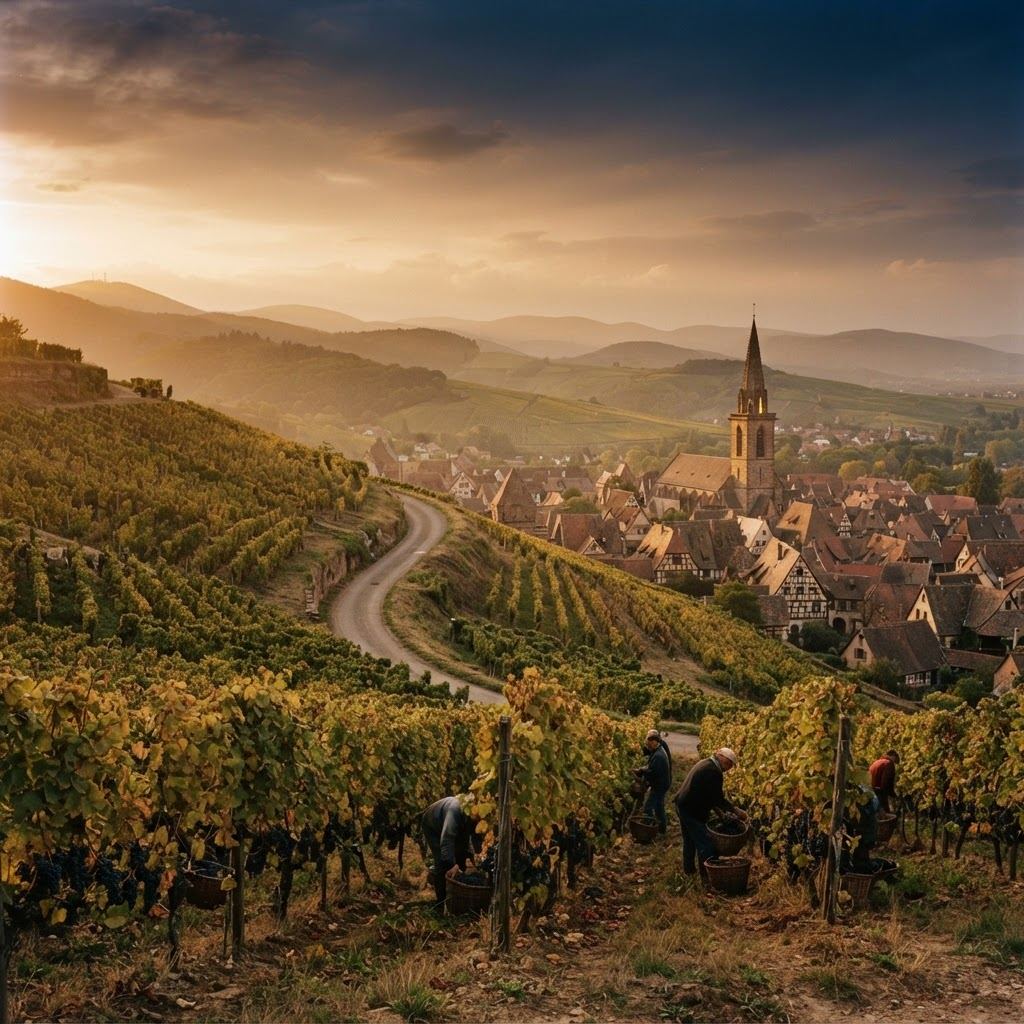
Covering 170 kilometres along the eastern slopes of the Vosges Mountains, the Alsace Wine Route passes through more than seventy wine-producing villages. This unique geography creates a dry and sunny microclimate protected from western rainfall, allowing grapes to ripen slowly and develop intense aromatic complexity. Travelling along the route reveals a landscape shaped by centuries of viticultural tradition, where ancient stone churches watch over carefully tended slopes.
Starting near Strasbourg at Marlenheim, the trail journeys southwards past Obernai, Ribeauville, Riquewihr, Kaysersberg, and Colmar before reaching its southern terminus at Thann. Each sub-region presents distinct soil types, ranging from granite and limestone to volcanic clay and sandstone. These varied terroirs give Alsatian wines their remarkable diversity, producing everything from crisp bone-dry whites to richly textured Grand Cru vintages.
Essential villages to explore along the route
Selecting which villages to visit along the 170 kilometre stretch depends on your personal interests and travel schedule, though several historic stops are unmissable for first-time visitors. Beyond their remarkable architectural beauty and colourful timber-framed facades, these picturesque towns house family-run wine estates where traditional winemaking crafts have passed through generations. Spending time in these villages allows travellers to discover hidden courtyard cellars, sample rare vintages, and appreciate the authentic heritage of Alsatian viticulture.
Obernai and the northern wine gateway
Located just thirty minutes south of Strasbourg, Obernai serves as the historic northern entry point to the wine route. Enclosed by medieval ramparts and centered around the picturesque Place du Marche, Obernai offers fantastic tasting rooms alongside half-timbered merchant houses. Visitors can explore the belfry, wander through narrow alleys, and sample refreshing local Riesling before heading deeper into the countryside.
Riquewihr and Kaysersberg in the heartland
Nestled in steep valleys near Colmar, Riquewihr and Kaysersberg showcase classic Alsatian charm. Riquewihr remains virtually unchanged since the sixteenth century, surrounded by medieval walls and lush vineyards. Kaysersberg, voted one of France's favourite villages, features a fortified bridge over the Weiss river, a ruined castle overlooking the town, and exceptional Michelin-starred dining alongside traditional tasting cellars.
Understanding the Alsace Grand Cru system and grape varieties
Alsace stands apart from most French wine regions because its bottle labels emphasize specific grape varieties rather than geographical origin alone. Over ninety percent of local production focuses on single-varietal white wines, celebrated globally for their expressive fruit purity, vibrant acidity, and exceptional versatility at the dining table. Understanding how grape varieties interact with distinct hillside soils provides a rewarding foundation for any wine tasting journey across the region.
The noble white grape varieties
Seven principal grape varieties define Alsatian viticulture. Riesling produces dry, elegant whites with citrus and mineral notes. Gewurztraminer delivers exotic aromas of lychee, rose petal, and baking spice. Pinot Gris offers rich body and orchard fruit tones, while Muscat provides floral lightness. Pinot Blanc and Sylvaner make refreshing daily wines, and Pinot Noir yields delicate red and rosé bottles.
Grand Cru terroirs and classification
The region recognizes fifty-one strictly defined Grand Cru vineyard sites, representing the absolute pinnacle of Alsatian terroir. These vineyards occupy steep, sun-drenched hillside plots with optimal exposure and drainage. Only noble varieties harvested by hand under strict yield limits may earn the Grand Cru designation, resulting in exceptional complexity, depth, and cellaring potential.
Tasting etiquette and cellar door visits
Visiting traditional wine cellars, known locally as caveaux, offers an authentic and memorable window into Alsatian rural culture. Most independent family estates welcome drop-in visitors for casual tastings, though booking appointments in advance is strongly recommended during peak autumn harvest months or for larger groups. Cellar doors are typically open from morning until early evening, closing briefly during mid-day lunch hours to allow winemakers time in the vineyards.
During a tasting, staff guide guests through a flight of wines moving from lighter dry whites toward richer Gewurztraminer or late-harvest bottles. Etiquette dictates taking time to smell and swirl each glass, using provided spittoons if driving, and purchasing a bottle or two if you enjoyed the experience. White wines are served chilled in elegant slender-stemmed glasses designed to capture delicate aromas.
Recommended multi-day itineraries for wine lovers
A two-day highlight itinerary focuses on the picturesque central belt surrounding Colmar, where famous wine villages cluster closely together. On day one, explore Obernai, the majestic cliffside fortress of Haut-Koenigsbourg, and Ribeauville, ending your evening with traditional Alsatian cuisine in a historic winstub. On day two, visit the fairytale streets of Riquewihr, Kaysersberg, and Eguisheim, spending your afternoon enjoying guided Grand Cru Riesling tastings at independent family estates.
For a four-day in-depth exploration, begin your journey in the north at Marlenheim and Barr, visiting historic monastic vineyards. Spend your second day exploring the central medieval villages and walking through scenic hillside vineyard trails. Allocate day three to Colmar's world-class art museums and southern wine estates near Guebwiller, finishing on day four at the southern gateway of Thann, home to the legendary steep volcanic slopes of Rangen Grand Cru.
Practical travel advice and navigating the vineyard trails
Navigating narrow country roads and winding vineyard paths requires careful planning. The wine route is best experienced between May and October, when the vines are lush green and tasting cellars operate full hours. Autumn brings the harvest season, known as the Vendanges, when hillsides turn golden yellow and grape presses work at full capacity. Winter visits offer cozy cellar tastings combined with festive holiday displays in nearby village squares.
Travelling between multiple wineries can present logistical challenges when everyone in your group wishes to participate in tastings. For wine lovers seeking total peace of mind, hiring a private driver allows guests to sample vintages freely without drink-driving concerns or navigating unfamiliar rural lanes. A personal vehicle service manages route timing, coordinates cellar appointments, and provides ample luggage space for purchased wine cases throughout your tour.