Exploring the historic Grande Ile and cathedral
The heart of Strasbourg lies on the Grande Ile, an island encircled by the River Ill that earned UNESCO World Heritage status in 1988. Standing tall at the island's centre is the Cathédrale Notre-Dame, a masterpiece of Gothic architecture crafted from pink Vosges sandstone. Its soaring 142-metre spire dominated Western Christendom for centuries and remains visible across the surrounding Alsatian plain.
Inside the cathedral, visitors marvel at brilliant thirteenth-century stained glass windows and the famous astronomical clock. Every day at half-past twelve, the clock's automated figures perform an intricate renaissance display depicting the ages of man and the apostles. Climbing the 332 steps to the cathedral observation platform rewards travellers with panoramic views extending across urban rooftops to the Black Forest.
Wandering through Petite France and the tanners quarter
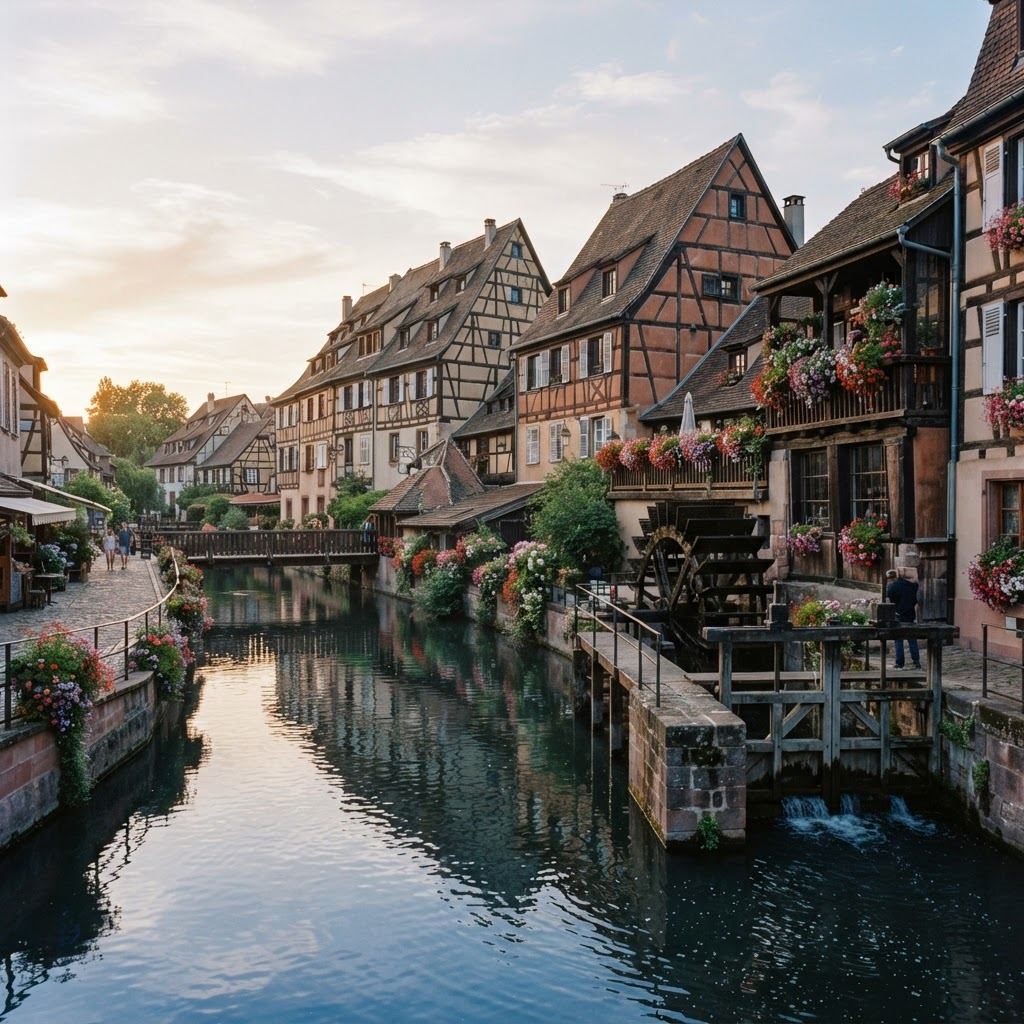
Located on the western tip of the Grande Ile, Petite France is Strasbourg's most romantic and photogenic historic district. Once home to tanners, millers, and fishermen, this tranquil neighbourhood features remarkably well-preserved sixteenth-century half-timbered houses with steep wooden rooflines originally designed for drying animal hides. Wandering along cobblestone footpaths past calm river reflections provides a delightful glimpse into the city's artisan history.
The canals and covered bridges
Four quiet canal channels crisscross Petite France, framed by weeping willows and flower-filled window boxes. The historic Ponts Couverts, a series of fortified bridges flanked by medieval defensive towers, mark the entrance to the district. Nearby, the Vauban Dam offers an elevated panoramic terrace with spectacular views of the waterways and historic rooftops.
Historic timber-framed architecture
Walking along cobblestone lanes like Rue des Tanneurs reveals intricate wooden carvings and courtyard balconies. The Maison des Tanneurs, built in 1572, stands as a prime example of traditional Alsatian craft. Today, many of these landmark timbered buildings house cozy boutique hotels, craft shops, and riverside winstubs serving local dishes.
Discovering the European quarter and Neustadt district
Beyond its historic medieval core, Strasbourg played a pivotal role in post-war European reconciliation, evolving into the official seat of major continental institutions. A short, pleasant tram ride north from the historic city centre brings visitors directly to the striking modern glass architecture of the European Quarter, contrasting beautifully with the nineteenth-century imperial grandeur of the adjacent Neustadt municipal district.
European institutions and diplomacy
The European Parliament building features a towering glass cylinder reflecting in the waters of the Marne-Rhine Canal. Nearby, the Council of Europe and the European Court of Human Rights complete this diplomatic hub. Guided visits and educational exhibitions offer fascinating insights into modern European democracy.
The German imperial Neustadt area
Built between 1871 and 1918 during German administration, the Neustadt district showcases monumental Wilhelminian architecture. Wide avenues lined with horse-chestnut trees connect expansive squares like Place de la Republique. Landmark structures include the Palais du Rhin, the National Library, and the University Palace.
Savouring traditional Alsatian gastronomy and winstubs
Strasbourg's vibrant culinary scene celebrates hearty, comforting regional flavours served in traditional historic eateries called winstubs. Originally winemakers' casual tasting rooms, these cozy wood-panelled taverns feature classic red-checked tablecloths and warm local hospitality. Dining in an authentic winstub is an essential Alsatian experience where local residents and international visitors gather together to share classic regional specialties alongside chilled local white wines.
Must-try regional dishes include traditional tarte flambee or Flammekueche, a thin wood-fired flatbread topped with creme fraiche, sliced onions, and crispy bacon lardons. Another famous staple is choucroute garnie, slow-simmered sauerkraut served with an assortment of smoked sausages, pork knuckles, and tender steamed potatoes. Save room for pungent local Munster cheese served with aromatic cumin seeds and a chilled glass of dry Alsatian Riesling.
A comprehensive 2-day Strasbourg itinerary
Day one begins in the historical centre with an early morning visit to the cathedral and its famous astronomical clock display. Spend your afternoon taking a relaxing electric boat tour around the Grande Ile before exploring the quiet cobblestone lanes of Petite France. Finish your evening with a candlelit dinner in a historic winstub sampling traditional wood-fired tarte flambee and regional white wines.
Day two focuses on modern European culture and imperial architecture. Explore the majestic Wilhelminian buildings of the Neustadt district in the morning, followed by a peaceful walk through Parc de l'Orangerie and a guided tour near the European Parliament. In the late afternoon, browse local artisan shops along Rue des Hallebardes before enjoying dinner near historic Place Gutenberg in the evening.
Unforgettable day trips from Strasbourg and local transport
Excursions outside Strasbourg offer effortless access to the wider Alsace region and neighbouring southwestern Germany. Popular day trips include the perched cliffside fortress of Haut-Koenigsbourg, the sacred mountain monastery at Mont Sainte-Odile, and the fairytale medieval streets of Colmar and Obernai situated along the nearby wine trail. Exploring these scenic regional treasures enriches any Alsatian holiday experience throughout the year.
While Strasbourg features an efficient urban tram and bus network for inner-city travel, reaching surrounding rural attractions, historic medieval castles, and family wine estates can be complex on public transit. For seamless day excursions across the countryside, hiring a private driver provides door-to-door comfort, customized schedules, and direct transport between regional highlights without transit transfers or rigid local bus schedules.